


Marble Countertops Pros and Cons: What Homeowners Should Know
Marble countertops are a good choice for homeowners who accept that the surface will change over time and a poor one for homeowners who expect it to stay showroom-perfect. That's the real tradeoff behind marble's pros and cons list: etching, staining, sealing limits, and a softer surface than granite or quartzite, balanced against natural veining and a look no engineered material fully replicates.
This guide breaks down what marble does well, what it asks of you in daily care, and where it tends to work best in a Phoenix-area home, so you can decide with real expectations instead of a showroom sample.
Is Marble a Good Choice for Kitchen Countertops?
Yes, for the right kitchen and the right homeowner. Marble can work well in a full working kitchen, but it asks more of you than granite or quartz. If acidic foods, heavy daily cooking, and quick cleanup habits describe your kitchen, marble will show wear faster than a harder material would. If you're drawn to the look and comfortable with a surface that develops character over time, a kitchen application can work well. The honest answer depends less on the room and more on how you use it and how you feel about visible change.
What Marble Does Better Than Other Countertop Materials
Marble's appeal comes from qualities that are genuinely hard to replicate.
Natural veining and individuality. Every marble slab is different, shaped by the specific geological conditions that formed it. No engineered surface fully recreates the depth and irregularity of real marble veining.
Finish options. Honed marble gives a soft, matte look. Polished marble gives a brighter sheen. Each changes how the stone reads in a room and how visible everyday marks become.
A cool, comfortable surface. Marble stays cooler to the touch than many other stones, which is part of why it's historically favored for baking and pastry work.
Aging character. Over years of use, marble develops what's often called patina, a softening of the surface that some homeowners find adds to the stone's appeal rather than detracting from it.
Etching, Staining, and Scratching Are Three Different Problems
These three terms get used interchangeably, but they're distinct issues with different causes.
Etching happens when an acidic substance, like lemon juice, wine, or vinegar, reacts with the calcium carbonate in marble and dulls the surface. Sealing reduces absorption but does not prevent etching. This happens on honed and polished marble alike.
Staining happens when a liquid absorbs into the stone and leaves a visible mark, usually from oil, coffee, or colored liquids left sitting too long.
Scratching happens from knives, cookware, or abrasive cleaning tools dragged across the surface, since marble is softer than granite or quartzite.
Knowing which problem you're looking at determines the right response. A quick wipe prevents most staining. Etching needs a different conversation, because once it happens, sealing after the fact won't reverse it. Granite handles this tradeoff differently since it isn't acid-sensitive the way marble is; how to know if granite countertops are right for your home walks through that comparison if you're weighing both.
Honed or Polished Marble: Which Finish Fits Real Life?
The finish you choose affects how visible day-to-day wear becomes, not whether marble wears at all.
Polished marble has a glossy, reflective surface that shows etch marks more visibly because the dulling contrasts against the shine. Honed marble has a matte finish that tends to hide etching and light scratching more effectively, since there's no sheen for the mark to interrupt. It's a common misconception that honed marble is etch-proof. It isn't. It simply hides the change more easily.
For a busy kitchen, honed marble is often the more forgiving choice. For a lower-use bathroom or accent surface where the reflective look matters more, polished marble may be worth the tradeoff.
What Sealing and Daily Care Can and Cannot Do
Sealing marble reduces how easily liquids absorb into the stone, which helps with staining. It does not create a barrier against acid, which means it does not prevent etching.
A realistic care routine looks like this:
Clean spills quickly, especially anything acidic like citrus, wine, or tomato-based sauces.
Use a pH-neutral stone cleaner rather than an all-purpose or acidic cleaner.
Keep cutting boards and trivets in regular use, since marble scratches and can be affected by concentrated heat near seams.
Check the seal periodically with a water-bead test, and reseal following your specific stone and sealer's guidance rather than a generic yearly rule.
None of this makes marble maintenance-free. It makes the maintenance predictable once you know what to expect.
Where Marble Tends to Work Best
Marble's fit changes depending on the room and how that room actually gets used.
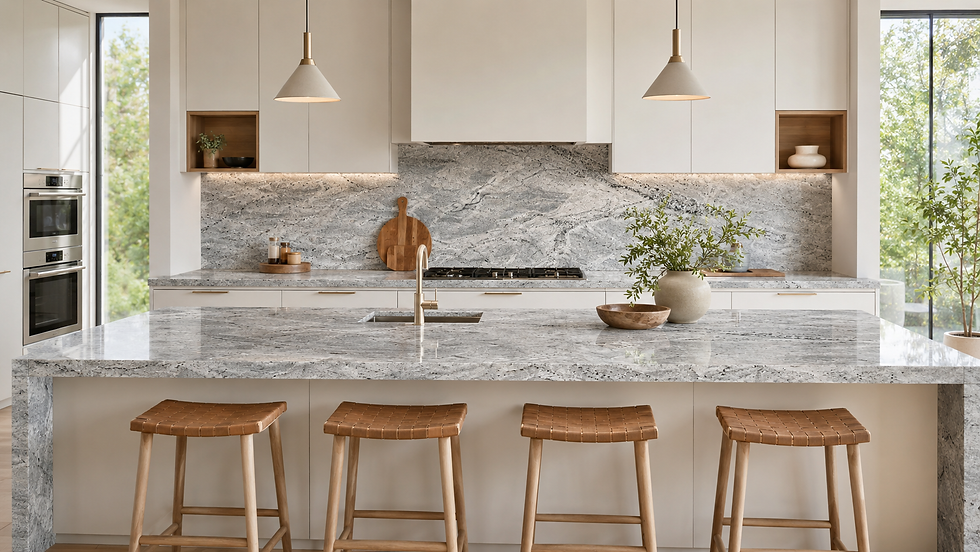
A full working kitchen with heavy daily cooking and acidic ingredients will show marble's tradeoffs the fastest. A kitchen island used mainly for prep and light cooking, paired with a more durable perimeter material, is a common way homeowners get the look without exposing the whole kitchen to the same wear. Bathrooms and bar areas, where acid exposure and heavy daily use are lower, tend to be more forgiving applications. Baking-focused kitchens sometimes justify a dedicated marble section specifically because of the cool surface, even when the rest of the kitchen uses a harder material.
The Full Slab and Fabrication Plan Matter
Marble's veining and fissures mean the actual slab you select determines much of the finished look, more so than with a more uniform material.
Viewing the full slab, not a small sample, lets you see how the veining will run across your specific layout. At our Phoenix fabrication shop, we plan seam placement and vein alignment during templating so a necessary seam doesn't interrupt the pattern in a distracting way. Cutouts, edge details, and support all get planned with the same laser templating and CNC fabrication process we use for granite and quartz, since marble's softer, more fragile structure benefits from that same precision. If you want more detail on how that process works, what custom countertop fabrication really means covers the full sequence.
Choose Marble If You Can Say Yes to These Questions
Are you comfortable with visible change over time, including etching and a developing patina, rather than expecting the surface to stay showroom-perfect?
Are you willing to clean up acidic spills quickly rather than letting them sit?
Does the application fit marble's limits, like a bathroom, island, or baking zone, rather than a heavy-use perimeter run?
Have you seen the full slab, not just a sample chip, and confirmed the veining works for your space?
If any of these give you pause, quartzite offers a similar natural-stone look with more resistance to etching, and quartz offers a lower-maintenance alternative with a more uniform appearance. What homeowners should know before choosing quartz countertops and is quartzite the right choice for your kitchen both walk through those tradeoffs in more depth.
See the Slab Before You Decide
If you're drawn to marble, the next step is seeing an actual slab in person and talking through where it will be used.
If you are drawn to marble, let's talk through where it will be used, how you feel about patina, and what the slab will require before anything is cut. We work with homeowners across Phoenix and the East Valley on exactly this kind of decision.
Frequently Asked Questions
Does sealing marble prevent etching?
No. Sealing reduces how easily liquids absorb into the stone, which helps prevent staining, but it does not create a barrier against acid. Etching happens when an acidic substance reacts with the calcium carbonate in the marble itself, and no sealer currently prevents that reaction.
Is honed marble easier to live with?
For many homeowners, yes. Honed marble's matte finish tends to hide etch marks and light scratching more effectively than a polished finish, since there's no sheen for the mark to interrupt. It isn't etch-proof, but the change is generally less visible.
How often should marble be sealed?
There's no single universal schedule. Resealing frequency depends on the specific stone's porosity, the sealer used, and how the surface is used day to day. A water-bead test is a practical way to check whether the seal is still holding.
Can marble work in a busy kitchen?
It can, but it will show wear faster than granite or quartzite in a kitchen with heavy daily cooking and acidic ingredients. Many homeowners manage this by using marble on a lower-use section, like an island, paired with a more durable material on the main perimeter.
What is the difference between a stain and an etch?
A stain is a liquid that absorbs into the stone and leaves a visible mark, often from oil or colored liquids. An etch is a chemical reaction between an acidic substance and the marble's calcium carbonate that dulls the surface. Sealing helps prevent staining but does not prevent etching.


Comments